Choosing the best roofing sheets for a garage is essential for protecting vehicles, tools and equipment from rain, wind and changing temperatures. The right option will depend on the roof pitch, supporting structure, required durability, budget and preferred finish.
At Roof Giant, we supply roofing sheets for domestic garages, workshops and larger outbuildings, including metal, bitumen, PVC and polycarbonate options. This guide compares the main materials and explains what to consider before choosing.
For a wider overview of profiles, materials and applications, visit our complete Roofing Sheets Buyer’s Guide.
A good garage roofing sheet should provide reliable weather protection while being suitable for the pitch, dimensions and construction of the roof.
Unlike a small garden shed, a garage often has a wider roof area and may contain valuable vehicles, machinery or tools. The roofing material therefore needs to be strong enough for the application and installed with the correct overlaps, fixings, flashings and supports.
Important factors to consider include:
Garages used as workshops may also need greater attention paid to insulation, ventilation and internal comfort than buildings used purely for storage.
For many pitched garages and workshops, metal roofing sheets are one of the strongest and most practical options.
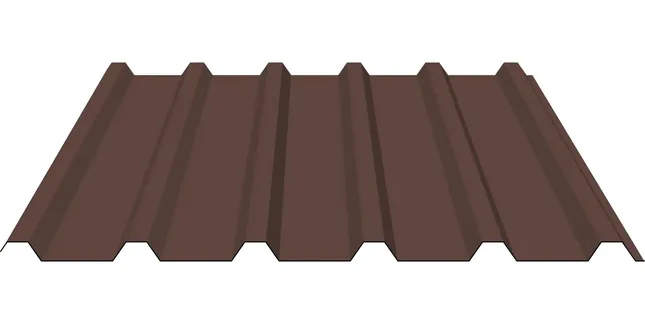
Metal sheets provide a rigid, durable roof covering that can handle the demands of larger buildings. They are especially well suited to detached garages, home workshops, agricultural-style buildings and commercial outbuildings.
Here at Roof Giant, we supply both box profile and corrugated metal roofing sheets in galvanised, polyester paint-coated and PVC plastisol-coated finishes.
Box profile sheets have angular, squared ribs that create a clean and modern appearance. Their strong profile makes them particularly suitable for wide garage roofs where rigidity and dependable water run-off are important.
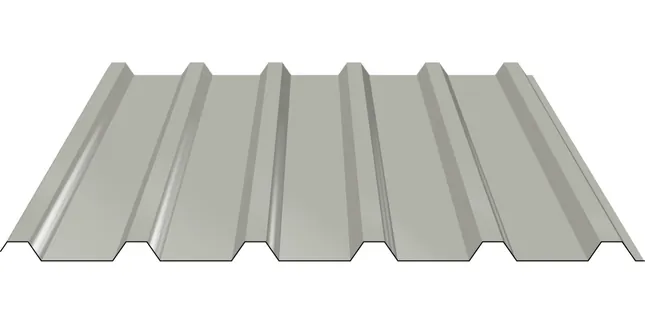
They are often a good choice for:
Metal sheets are available with several finishes. PVC plastisol coatings offer a durable, low-maintenance exterior, polyester paint coatings provide a practical and economical coloured finish, and galvanised sheets offer a simple metallic appearance for functional garages and outbuildings.
For garages used as workshops or for storing wet vehicles, ventilation, insulation or an anti-condensation solution may also be needed to manage moisture beneath the sheets.
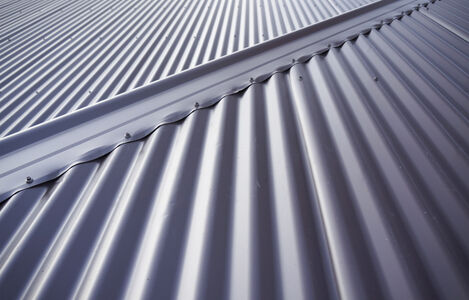
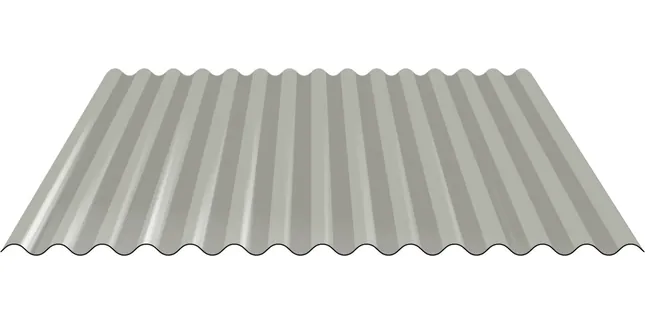
Corrugated metal sheets feature a traditional rounded wave profile. They offer many of the same benefits as box profile roofing but provide a softer, more traditional appearance.
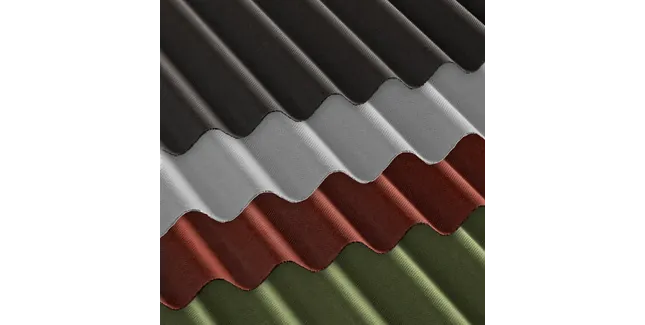
They may be suitable for garages where you want the strength of steel combined with the familiar appearance of corrugated roofing. They can also work well on workshops, agricultural garages and outbuildings.
Both corrugated and box profile sheets must be installed with the correct fixings and overlaps. Ridge flashings, barge flashings and profile fillers may also be required to create a properly finished and weather-resistant roof.
For a closer comparison of the two styles, see our guide to corrugated vs box profile roofing sheets.
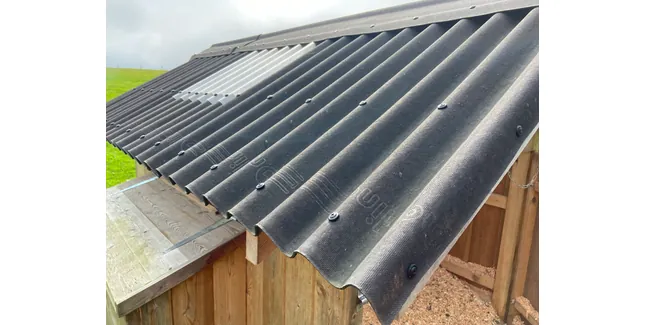
Bitumen roofing sheets provide a lightweight and cost-effective alternative to metal roofing.
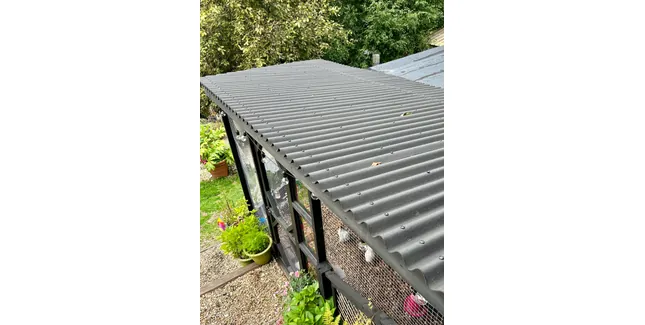
The corrugated profile helps improve the strength of the sheet while directing rainwater down the roof. Bitumen sheets are also relatively easy to handle, cut and install, making them a popular option for timber garages and smaller projects where lightweight, manageable sheets are preferred.
They may be particularly suitable for:
Bitumen sheets are generally quieter during rainfall than uninsulated metal sheets and are available in different colours, allowing the garage roof to complement surrounding garden buildings or the exterior of the home.
Although lightweight, they still require a suitable supporting structure and must be installed according to the manufacturer’s specified minimum pitch, support spacing, overlaps and fixing pattern.
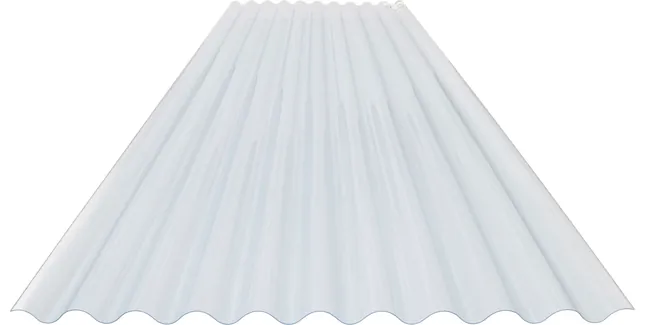
Corrugated PVC roofing sheets are lightweight, affordable and available in clear or opaque finishes.
PVC is generally best suited to smaller, sheltered or lightweight structures. For a large garage in an exposed location, a heavier-duty sheet or another roofing material may be more appropriate.
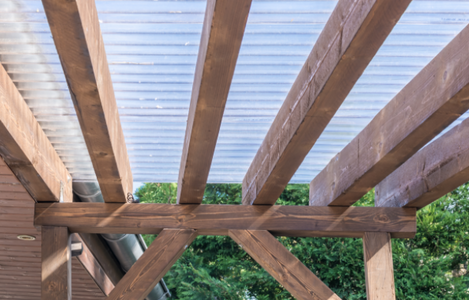
Clear PVC sheets allow daylight into garages, lean-tos and covered working areas, making them a practical lower-cost option where some natural light is required.
PVC sheets are commonly used for:
Different thicknesses and weight grades are available, so it is important to choose a sheet that is suitable for the size and exposure of the garage.
Lightweight sheets may be appropriate for smaller sheltered projects, while heavy-duty or superweight sheets may provide greater rigidity for more demanding applications.
PVC expands and contracts as temperatures change, so fixing holes must normally allow for movement. The sheets should also be installed using suitable profile fixings and accessories designed to provide a firm, watertight fit.
Polycarbonate roofing sheets are an excellent option when natural light and impact resistance are priorities.
Polycarbonate is available in corrugated, twinwall and multiwall forms. Corrugated sheets can provide a straightforward roof covering, while multiwall sheets contain internal channels that improve rigidity and thermal performance.
Clear sheets allow the greatest amount of light through, while bronze, opal and heat-reducing options can help soften brightness or reduce glare.
A fully transparent garage roof may not always be desirable because it can reduce privacy and allow the interior to become warmer in direct sunlight. One alternative is to use selected translucent panels as rooflights within an otherwise opaque roof, provided the profiles and materials are designed to work together.
Multiwall polycarbonate also requires the correct glazing bars, closure profiles, tapes and end caps to protect the sheet channels and provide a secure installation.
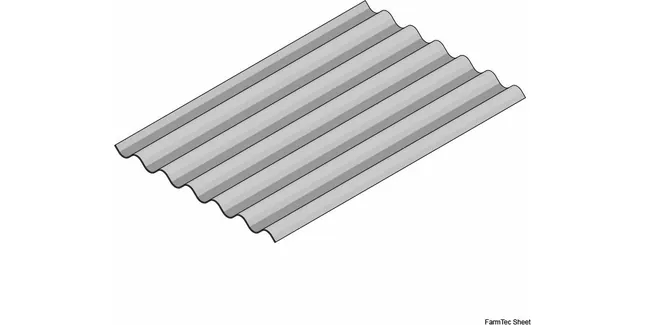
Fibre cement roofing sheets can also be worth considering for garages, workshops and larger outbuildings, particularly where a traditional corrugated appearance, quieter rainfall and condensation performance are important.
They are generally heavier than lightweight bitumen, PVC or polycarbonate sheets, so the supporting structure must be suitable for the load. Always check the manufacturer’s guidance for minimum roof pitch, support requirements, fixings and installation before ordering.
Garage roofs are not always built to standard dimensions. Ordering sheets that are much longer than required can create unnecessary cutting, waste and additional work on site.
Our cut-to-size roofing sheets include metal and polycarbonate options manufactured to suit specific project measurements.
Cut-to-size sheets can be particularly useful for garages because they can:
Metal sheets can be supplied to suit larger pitched roofs, while cut-to-size polycarbonate may be useful for rooflights, side extensions and covered areas adjoining the garage.
Measurements should be checked carefully before placing an order. Remember to account for the required eaves overhang, side laps and any other allowances stated in the manufacturer’s installation guidance.
Suitable fixings, flashings, fillers and installation accessories are also available to help complete the roof correctly.
There is no single roofing sheet that will suit every garage. The best material depends on the building and how it will be used.
Metal box profile sheets are a strong all-round choice for substantial pitched garage roofs. Their rigid profile, cut-to-length availability and range of protective finishes make them suitable for both domestic and commercial-style buildings.
Corrugated metal sheets combine the strength of steel with a familiar rounded profile. They can work particularly well on workshops, rural properties and agricultural-style garages.
Bitumen roofing sheets are lightweight, easy to handle and suitable for many timber-framed garages. They can be a practical option where the supporting structure is not designed for a heavier roof covering.
Polycarbonate is usually the most suitable choice when daylight is a priority. PVC can also provide a cost-effective clear roofing solution for smaller or more lightly used garages.
Bitumen sheets are often a practical lower-cost option for timber garages and smaller outbuildings. PVC may also suit lightweight or sheltered projects, although the sheet grade, exposure and expected lifespan should be considered alongside the purchase price.
Roofing sheets require sufficient pitch to allow rainwater to drain correctly and may not be suitable for a genuinely flat or very low-pitched garage roof.
For flat garage roofs, an EPDM membrane or another dedicated flat roofing system will usually be more appropriate than profiled roofing sheets.
Always check the minimum pitch stated for the chosen sheet before ordering, or explore our wider garage roofing materials if your roof requires a dedicated flat roofing system.
Condensation can form when warm, moisture-containing air meets the colder underside of a roofing sheet. This is particularly common in garages containing wet vehicles or equipment, or in buildings used as workshops.
Good ventilation, insulation and suitable condensation-control products can help reduce the risk. Some metal sheets may also be available with an anti-condensation backing, depending on the product range.
Begin by measuring the length of the roof from the ridge to the eaves. Add any required overhang before choosing the sheet length.
Next, measure the width of each roof slope. Divide this by the effective cover width of the chosen sheet rather than its total width. The effective cover width allows for the side overlap between neighbouring sheets.
You should also consider:
For garages with an irregular layout, attached walls or several roof sections, preparing a simple scale drawing can help prevent ordering errors.
Bitumen roofing sheets are often a practical lower-cost choice for timber garages and smaller outbuildings. PVC can also be economical for lightweight or sheltered structures, although price should be considered alongside durability, exposure and the required sheet grade.
Bitumen sheets are a popular lightweight option for timber garages. Metal sheets can also be suitable where the roof structure is designed to support them. Always check the weight, support spacing and installation requirements of the chosen product.
Most profiled roofing sheets require a minimum pitch to drain rainwater correctly, so they are not normally suitable for genuinely flat roofs. An EPDM membrane or another dedicated flat roofing system is generally a better choice.
Good ventilation, suitable insulation and condensation-control products can all help. Depending on the product range, metal roofing sheets may also be available with an anti-condensation backing.
The best roofing sheet for a garage depends on the roof pitch, supporting structure, level of exposure and how the building will be used.
Box profile metal sheets are a strong all-round option for substantial garage roofs, while corrugated metal offers similar durability with a more traditional appearance. Bitumen sheets provide a lightweight solution for many timber garages, and PVC or polycarbonate can be useful where natural daylight is required.
Before ordering, check the minimum roof pitch, effective cover width, fixing requirements and supporting structure for the chosen product.
Explore Roof Giant’s range of garage roofing materials, including roofing sheets, flashings, fixings and installation accessories. For further guidance on comparing materials, profiles and applications, visit our complete Roofing Sheets Buyer’s Guide.