PVC and polycarbonate are two popular options for lightweight sheet roofing. Both can provide a practical, weather-resistant covering while allowing natural light into the space below, but there are important differences between the two materials.
PVC roofing sheets are often chosen for straightforward projects where cost, low weight and ease of installation are priorities. Polycarbonate typically provides greater impact resistance and durability, making it suitable for applications where a tougher roofing material is required.
In this guide, we compare PVC vs polycarbonate roofing sheets to help you decide which material is better suited to your project. For a broader comparison of sheet materials, see our roofing sheets buyer’s guide.
PVC, or polyvinyl chloride, and polycarbonate are both thermoplastic materials, but they have different characteristics.
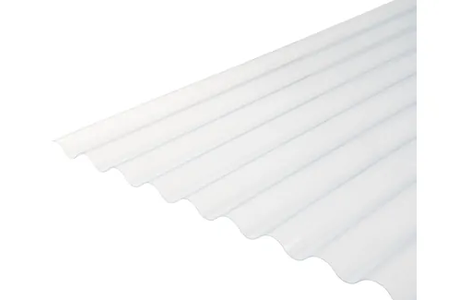
Corrugated PVC sheets are lightweight, relatively easy to cut and available in clear, translucent and opaque options. They offer good value for money and are commonly used for garden buildings, lean-tos, canopies and similar smaller roofing projects.
Polycarbonate is a tough material with high impact resistance. Roofing sheets are available in corrugated, solid and multiwall forms, giving you more choice when strength, insulation or light transmission is an important consideration.
You can browse both materials within our full range of roofing sheets.
Features: PVC Roofing Sheets Polycarbonate Roofing Sheets Weight Lightweight Lightweight Impact resistance Suitable for many everyday roofing applications Higher impact resistance Insulation Limited compared with multiwall systems Multiwall sheets can provide improved thermal insulation Light transmission Clear and translucent options available High optical clarity available Ease of installation Straightforward to cut and install Straightforward with the correct system and accessories Cost Generally suited to budget-conscious projects Typically chosen where higher performance is required Common uses Sheds, lean-tos, canopies, greenhouses and outbuildings Conservatories, canopies, pergolas, carports and covered areas Available formats Mainly corrugated profiles Corrugated, solid and multiwall options
The exact performance will depend on the individual product, thickness and manufacturer, so always check the specification before making a final choice.
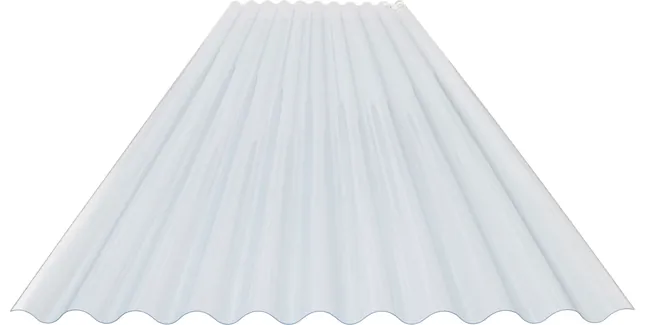
PVC roofing sheets provide a lightweight roof covering for a wide range of domestic, DIY and light commercial applications.
Corrugated PVC is particularly common. The profiled shape helps increase the rigidity of the sheet without adding excessive weight and also helps direct rainwater down the roof.
Clear sheets are useful where maintaining daylight is important, while opaque and coloured PVC sheets can be selected where transparency is not required. For a more detailed introduction to the material and the available options, see our PVC Roofing Sheets Guide.
Typical uses include:
Our What Are PVC Roofing Sheets Used For? guide can help if you are considering PVC for a specific application. For larger farm and rural structures, you can also compare the available options in Best Roofing Sheets for Agricultural Buildings.
Polycarbonate roofing sheets are lightweight plastic panels designed to provide a strong and durable roof covering.
One of the main advantages of polycarbonate is its high impact resistance. This makes it a useful option where the roof may face more demanding conditions or where additional strength is desirable.
Polycarbonate roofing is also available in several different forms.
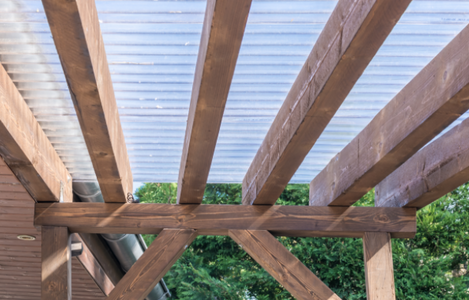
Corrugated polycarbonate has a profiled design similar to corrugated PVC. It combines low weight with greater impact resistance and is suited to applications such as canopies, covered areas and outdoor structures.
Multiwall sheets contain several layers separated by internal channels.
These chambers help improve the insulating performance of the panel compared with a simple single-skin sheet, making multiwall polycarbonate a popular choice for conservatories, canopies and other areas where thermal performance matters.
Solid polycarbonate has the appearance of a solid glazing panel while offering high impact resistance.
The right format will depend on the structure and the level of strength, insulation and light transmission you need.
Browse our polycarbonate roof sheets to compare the different options, or see our Polycarbonate Roofing Sheets Guide for more help choosing between them.
Polycarbonate generally offers greater impact resistance than PVC, which can make it more suitable for roofs where additional toughness is required.
PVC remains suitable for many everyday roofing applications, however. Different PVC products are available in lightweight, heavy-duty and superweight specifications, so the required performance should be considered rather than choosing on material alone.
Our PVC Roofing Sheets Sizes and Thickness Guide explains the different options in more detail.
If impact resistance is particularly important to the project, check the individual manufacturer’s technical specifications and guarantees before ordering.
Both PVC and polycarbonate are available in clear options and can be used where natural daylight is required.
Clear PVC is often a practical solution for simple garden buildings, lean-tos and covered areas.
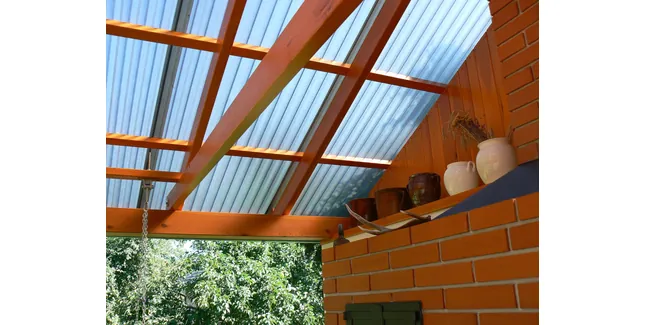
Polycarbonate can offer high optical clarity and is also available in a much wider choice of glazing configurations. Clear, bronze, opal and other finishes may be available depending on the range.
Your choice should therefore consider more than whether the sheet is simply described as clear. Check its light transmission, tint and UV properties where these are important to the finished project.
Polycarbonate has the advantage where thermal insulation is an important requirement, particularly when multiwall sheets are used.
A multiwall polycarbonate panel contains internal chambers that help reduce heat transfer through the sheet. Different thicknesses and structures are available depending on the level of insulation required.
A standard corrugated PVC sheet is a single-skin product and does not provide the same insulating properties.
For an open-sided canopy or basic garden shelter, this may make little practical difference. For a conservatory or enclosed structure, insulation may be a much more important consideration.
PVC is generally the option to consider where keeping the initial cost down is a priority.
It is commonly used for relatively simple roofing projects because it combines low weight, weather resistance and straightforward installation with good value for money.
Polycarbonate usually represents a greater investment, particularly for thicker multiwall sheets and complete glazing systems. In return, it can provide greater impact resistance and improved thermal performance.
Cost should therefore be weighed against the performance you actually need rather than considering the price of the sheets alone.
Fixings, glazing bars, flashings, end closures and other accessories may also need to be included when comparing the total cost of each roofing system.
Both PVC and polycarbonate can be suitable for DIY installation when the correct tools, fixings and supporting structure are used.
Corrugated PVC is lightweight and relatively easy to cut, drill and position. Sheets are normally overlapped and secured to suitable roof supports with compatible fixings. The amount of overlap required will depend on the sheet profile, roof pitch and manufacturer, see How Much Overlap Should Roofing Sheets Have? for further guidance.
Always follow the instructions supplied by the sheet manufacturer.
Corrugated polycarbonate can be installed in a similar way, although fixing requirements will vary by product. Our Roofing Sheet Fixings Explained guide provides more information about choosing suitable fixings for different sheet materials.
Multiwall polycarbonate generally uses a more complete glazing system, including compatible glazing bars, end profiles, tapes and fixings. Accurate installation is particularly important to allow for expansion and provide effective drainage and weather protection.
For general preparation and installation advice, see our How to Install Roofing Sheets guide, alongside the instructions supplied with your chosen product.
Both materials can work well on a lean-to.
PVC may be suitable where you want a straightforward, economical covering for a simple structure. Clear PVC can keep the area underneath bright while providing protection from rain.
Polycarbonate is worth considering where you want greater impact resistance or a more substantial glazing system. Multiwall polycarbonate may also be useful when insulation is a consideration.
Roof pitch, span, support centres and exposure should all be checked against the requirements of the chosen system.
Clear PVC can be used for greenhouse roofs and other growing areas where good natural light is required.
Polycarbonate is also widely suited to greenhouse applications. Multiwall sheets have the additional benefit of insulating air spaces within the panel, which may be useful where retaining heat is important.
Consider light transmission, insulation, impact resistance and your budget when deciding between the two.
Both PVC and polycarbonate are commonly used to create covered outdoor spaces.
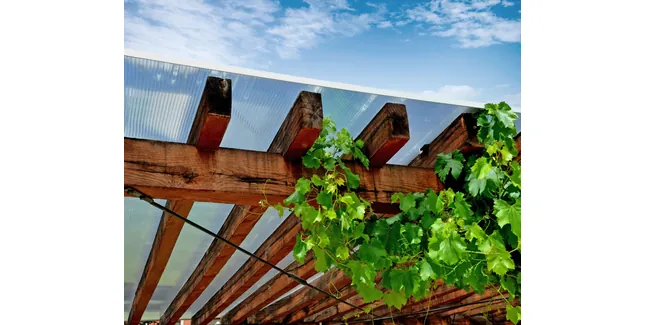
PVC provides a practical solution for simple canopies and garden structures where low weight and value are key considerations.
Polycarbonate may be preferable for a more permanent structure where increased toughness or a choice of glazing options is required.
Roof Giant stocks both materials within its range of gazebo and pergola roofing materials.
A carport roof needs to protect the area underneath while dealing with regular exposure to the weather.
Both materials can be suitable when correctly specified and installed. PVC can provide an economical lightweight covering, while polycarbonate offers higher impact resistance.
Clear and translucent sheets can also prevent the covered area from becoming unnecessarily dark.
Explore our lean-to and carport roofing materials for products designed for these types of structure.
You can also compare these materials with other options in our Best Roofing Sheets for Carports guide.
There is no single lifespan that applies to every PVC or polycarbonate roofing sheet.
Longevity depends on the quality and thickness of the product, UV protection, exposure, installation and ongoing conditions. Product guarantees also vary considerably between manufacturers and ranges.
For this reason, compare the technical data and guarantee supplied with individual products rather than choosing purely on the material name.
Correct installation is equally important. Incorrect support spacing, fixings or allowance for thermal movement can affect the performance of either type of sheet.
Yes. Plastic roofing materials expand and contract as temperatures change.
The roofing system must therefore allow for thermal movement. This may involve drilling fixing holes larger than the fixing itself, maintaining specified clearances or using purpose-designed glazing bars and accessories.
Requirements vary between products, so always follow the manufacturer’s installation instructions.
The most suitable option depends on what you need from the roof.
Consider PVC if:
If you are choosing a material specifically for a garden building, our Best Roofing Sheets for Sheds guide compares the main roofing sheet options.
Consider polycarbonate if:
Neither material is automatically the right choice for every application. The roof design, location, required lifespan, budget, insulation requirements and manufacturer specifications should all be considered.
You can compare PVC and polycarbonate with bitumen, metal, fibre cement and GRP in our complete roofing sheets buyer’s guide.
PVC and polycarbonate both provide lightweight alternatives to traditional roof coverings, but their strengths suit different projects.
PVC is a practical choice where value, simplicity and low weight are priorities. Polycarbonate offers greater impact resistance and a wider choice of sheet constructions, including multiwall panels where additional thermal performance is required.
Before ordering, check the roof pitch, sheet dimensions, support spacing, fixing requirements and compatible accessories for the specific product you intend to use.
If you are also considering profiled metal roofing for your project, our Box Profile Roofing Sheets Guide explains how box profile sheets work and where they are commonly used.
Browse Roof Giant’s complete range of roofing sheets, including PVC roofing sheets and polycarbonate roofing sheets, to find a suitable system for your project.