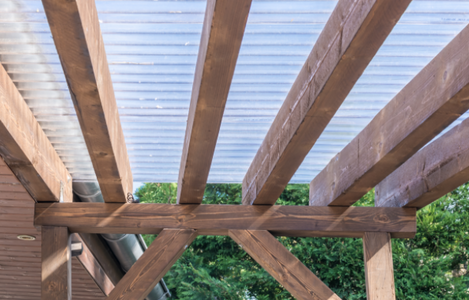
PVC roofing sheets are a practical, lightweight and cost-effective choice for many domestic, garden and outdoor roofing projects. They are commonly used for carports, lean-tos, canopies, covered walkways, garden shelters, plant houses and small outbuildings.
Choosing the right PVC roofing sheet size and thickness is important. The correct length can reduce cutting and unnecessary overlaps, while the correct thickness can provide a suitable level of rigidity and durability for your project.
In this guide, we look at common PVC roofing sheet sizes, thickness options, how to choose the right sheet for your roof and which accessories you may need for installation.
For a wider overview of different sheet materials, profiles and uses, visit our Roofing Sheets Buyer’s Guide.
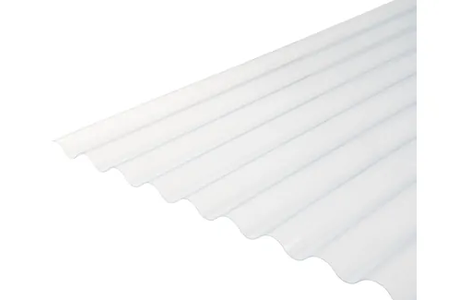
PVC roofing sheets are plastic roof sheets manufactured from polyvinyl chloride. They are usually formed into a corrugated profile, which adds rigidity without making the sheets excessively heavy.
The corrugations also create channels that help rainwater run down the roof, provided the sheets are installed at a suitable pitch.
PVC sheets are available in clear, translucent and opaque finishes. Clear and translucent sheets are particularly useful where natural light is important, allowing you to create a covered area, without making the space below feel dark or enclosed.
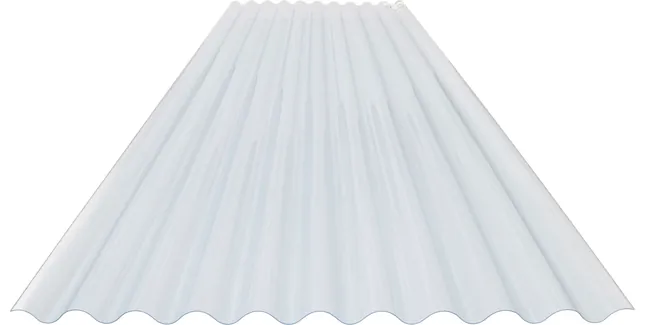
At Roof Giant, you can find our range of PVC roofing sheets in different profiles, lengths and thicknesses, alongside compatible fixings and accessories to help complete your installation.
For more information on PVC roofing, including applications, installation and maintenance advice, visit our PVC Roofing Sheet Guide.
PVC roofing sheet dimensions vary depending on the manufacturer, profile and product range.
Across Roof Giant’s wider PVC sheet collection, available lengths include:
Available widths within the wider range include:
Not every combination of length, width, profile and thickness is available, so always check the dimensions shown on the individual product page before ordering.
Where possible, choose a sheet long enough to run continuously from the highest point of the roof slope to the eaves. This reduces the need for horizontal end laps and can create a neater finish with fewer potential points of water entry.
Longer sheets can, however, be more difficult to transport, lift and position. The best option will depend on the size of the roof, access to the site and the number of people available to handle the sheets safely.
Choosing a suitable sheet size can make installation quicker, reduce waste and improve the finished appearance of the roof.
If your sheets are shorter than the roof slope, you may need to join two sheets with an end lap. This creates another joint that must be positioned and installed correctly.
If the sheets are much longer or wider than required, they may be harder to handle and may require more cutting.
When choosing a size, consider:
Do not select a sheet based on its overall dimensions alone. The usable coverage will be reduced by the overlap between adjoining sheets.
The stated width of a PVC roofing sheet is not always the amount of roof it will cover.
Corrugated sheets must overlap at the sides to help prevent water passing through the joint. Once this side lap has been allowed for, the usable width is known as the effective cover width.
For example, selected Solstice 3-inch ASB PVC sheets have:
Measurement Width Full physical sheet width 762mm Recommended side overlap 111mm Effective cover width 651mm
This means that each sheet adds approximately 651mm of coverage across the roof rather than the full 762mm physical width.
Always use the product’s effective cover width when calculating quantities. Using the full sheet width could leave you short of material.
Different profiles require different overlaps, so do not assume that every PVC roofing sheet has the same cover width.
Our guide to How Much Overlap Should Roofing Sheets Have? explains why overlap requirements vary and what to consider when planning sheet coverage.
To estimate the number of sheets needed across the roof, divide the total roof width by the effective cover width of the selected sheet.
Number of sheets required = total roof width ÷ effective cover width
Always round the result up to the next whole sheet.
Example calculation
Suppose your roof is 3,000mm wide and your chosen sheet has an effective cover width of 651mm:
3,000 ÷ 651 = 4.61
You would therefore need at least five sheets across the roof.
This is a basic estimate. You may need additional material for:
Check the individual product instructions or speak to the Roof Giant team before ordering if you are unsure.
Sheet thickness affects the weight, flexibility, rigidity and overall feel of a PVC roofing sheet.
Roof Giant’s clear Solstice 3-inch ASB range includes three main thickness options:
Sheet type Thickness Typically chosen for Lightweight 0.8mm Small, sheltered and budget-conscious projects Heavy Duty 1.1mm Regular domestic use and more permanent outdoor covers Superweight 1.3mm Projects where a thicker and more rigid sheet is preferred
Roof Giant also stocks other PVC profiles in thicknesses such as 1mm and 1.2mm. Thicknesses therefore vary across the complete PVC range and are not limited to the three options above.
Always compare products by profile, thickness, dimensions, cover width and intended application rather than thickness alone.
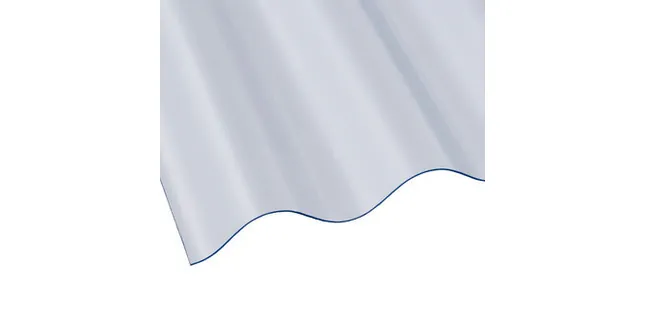
Lightweight PVC roofing sheets are often selected for small projects where affordability and ease of handling are priorities.
Lightweight PVC sheets are available in thicknesses such as 0.8mm, depending on the product range and profile.
Lightweight sheets may be suitable for:
Their lower weight can make them easier to lift, position and cut. However, lightweight sheets are generally more flexible than thicker alternatives.
Correct support spacing, suitable fixings and careful installation are particularly important. A lightweight sheet should not be used as a substitute for a thicker sheet where the location or structure requires greater rigidity.
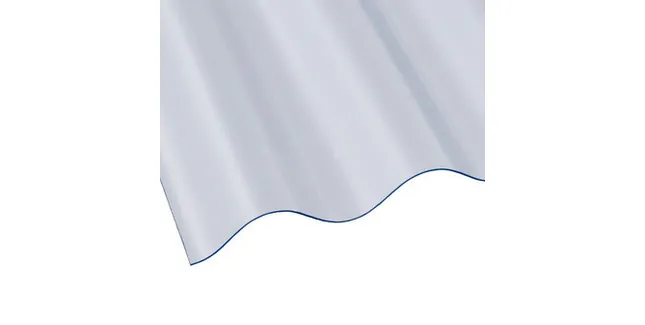
Heavy duty PVC sheets provide increased thickness and rigidity compared with lightweight sheets.
Heavy-duty PVC sheets are available in thicknesses such as 1.1mm, depending on the product range and profile, and can be suitable for a variety of roofing, cladding, construction and DIY applications.
For many domestic projects, heavy-duty PVC provides a useful balance between cost, light transmission, ease of installation and rigidity.
The exact suitability of a sheet will still depend on the size of the structure, support spacing, roof pitch and exposure of the site.

Superweight PVC sheets are thicker and more rigid than lightweight and standard heavy-duty options.
Selected superweight PVC sheets are available in thicknesses such as 1.3mm, providing a more substantial option where additional rigidity is preferred.
They may be suitable for:
A thicker sheet is not automatically suitable for every roof. The supporting structure, fixing method, roof pitch and manufacturer’s installation instructions remain equally important.
The most suitable thickness depends on the size, purpose and location of the roof.
As a general guide:
If you are choosing a roof covering specifically for a carport, our guide to the Best Roofing Sheets for Carports compares the main materials and their advantages.
Also consider:
The product instructions should take priority over general guidance. If the roof is unusually large, exposed or complex, obtain appropriate professional advice before installation.
PVC sheets are available in different corrugated profiles. A profile describes the shape, depth and spacing of the corrugations.
If you are comparing different roofing sheet profiles, our guide to Corrugated vs Box Profile Roofing Sheets explains the key differences between the two common designs.
Accessories designed for one profile may not fit another. For example, a filler shaped for a 3-inch profile should not be assumed to fit a miniature, 6-inch or 93/35 sheet.
Check that every fixing and accessory is described as compatible with your chosen sheet profile before ordering.
Measure the roof carefully before selecting your sheets.
Measure from the highest point of the roof down to the eaves.
Allow for the required eaves overhang, but do not create an excessive unsupported projection. Roof Giant’s clear corrugated sheet installation information shows a maximum eaves overhang of 70mm for the system covered by that guide.
Requirements may differ between products, so check the instructions supplied with your chosen sheets.
Measure the complete roof from side to side.
Use the effective cover width rather than the physical sheet width when calculating how many sheets are needed.
Corrugated sheets must overlap at the sides. The exact overlap will depend on the product and profile.
Selected Solstice 3-inch ASB sheets have a stated effective cover width of 651mm from a physical width of 762mm. Always follow the side-lap instructions shown on the individual product page.
If more than one sheet is required from the top of the roof to the eaves, you will need an end lap.
The required overlap depends on the sheet range, roof pitch and exposure of the site. Shallower roofs and locations regularly exposed to strong winds may require a larger overlap.
Always follow the installation instructions supplied with the exact sheet being installed, as end-lap requirements can vary between PVC roofing products.
Allow additional material where sheets must be cut around:
Plan the sheet layout before cutting so that narrow sections and unnecessary waste are kept to a minimum.
PVC roofing sheets must be installed at a sufficient pitch to allow water to drain away.
A roof that is too flat may allow water to collect around corrugations and overlaps, increasing the risk of water entering the structure.
The required minimum pitch and end lap can vary by manufacturer, profile, roof length and degree of exposure.
Roof Giant’s installation information for clear corrugated sheets illustrates how the end overlap increases as the roof pitch becomes shallower:
Roof pitch Illustrated end overlap More than 15 degrees 170mm 10 to 15 degrees 200mm 5 to 10 degrees 300mm
Selecting the sheet is only one part of the installation. You will also need compatible accessories to secure the sheets and finish vulnerable areas.
Our guide to Roofing Sheet Fixings Explained covers the different types of fixings used with roofing sheets and why choosing a fixing suited to the sheet material and profile matters.
Depending on the roof design, you may need:
Roofing sheet fixings must allow for the properties of the sheet and should not be overtightened. Some profile-specific fixing systems are designed to help reduce the risk of overtightening.
Installation guidance for corrugated PVC sheets commonly requires fixings to pass through the crown, or raised part, of the corrugation rather than through the lower channel.
Always follow the fixing positions, drilling instructions and quantities specified by the product manufacturer.
Browse Roof Giant’s PVC sheet fixings and accessories to find products designed for different profiles and sheet systems.
PVC roofing sheets can generally be cut to size using suitable tools and the method recommended by the manufacturer.
Cutting may be required around walls, posts, roof edges or awkward corners.
Before cutting:
Plan your sheet arrangement before making any cuts. In some cases, the roof width can be matched by increasing the side overlap slightly rather than making a narrow vertical cut, provided this remains consistent with the manufacturer’s instructions.
Store unused and uninstalled sheets flat, dry and out of direct sunlight. Heat can build up between stacked sheets and may cause distortion.
PVC roofing sheets are not designed to support a person’s weight.
Never walk, stand or kneel directly on PVC roofing sheets.
Use suitable access equipment, crawl boards or other professionally recommended working methods when installing or maintaining a sheeted roof.
You should also:
Installation at height carries serious risks. Make sure suitable access equipment and fall-protection measures are used.
PVC is often chosen for affordable, lightweight domestic roofs where natural light is important. Polycarbonate is generally preferred where greater impact resistance is required, while multiwall polycarbonate can also provide improved thermal performance for suitable enclosed structures and glazing systems.
The best choice depends on your budget, roof design, strength requirements and whether insulation is a priority. For a more detailed comparison of the two materials, see PVC vs Polycarbonate Roofing Sheets.
PVC is often chosen where natural light is important, such as for lean-tos, canopies, plant houses and covered outdoor spaces. Bitumen sheets are opaque and are generally preferred for sheds, garages, stables and outbuildings where a solid-looking roof covering is required.
Your choice will largely depend on whether you want daylight to pass through the roof or prefer a fully opaque covering.
For a full comparison of PVC, polycarbonate, bitumen, metal, GRP and fibre cement products, read our Roofing Sheets Buyer’s Guide.
Before placing your order, check:
Taking the time to check these details can reduce waste, prevent quantity errors and help create a more secure and consistent finish.
PVC roofing sheets are available in a range of lengths, widths, profiles and thicknesses for domestic, garden and outdoor roofing projects.
Whether you are covering a small shelter, replacing sheets on a lean-to or creating a bright covered space, selecting the right sheet size, profile and thickness will help you achieve a better result.
Browse Roof Giant’s PVC roofing sheets, including lightweight, heavy-duty and superweight options, along with compatible fixings, flashings and fillers.
For more help comparing materials and selecting the right roofing system, visit our Roofing Sheets Buyer’s Guide.