Agricultural buildings need roofing that can cope with demanding conditions throughout the year. Barns, stables, livestock housing, machinery stores and workshops can be exposed to wind, heavy rain, temperature changes, moisture and potentially corrosive environments, so choosing the right roofing sheets is important.
The best roofing sheets for an agricultural building will depend on how the structure is used, its size, roof pitch, ventilation requirements and the level of durability needed.
As a general rule, fibre cement is often an excellent all-round choice for permanent livestock buildings, stables and barns. Profiled metal sheets are particularly practical for large machinery stores and workshops, while lightweight bitumen sheets can work well on smaller shelters and timber-framed outbuildings.
In this guide, we compare the main agricultural roofing sheet materials and explain what to consider before choosing a system.
For a broader comparison of roofing materials, visit our complete Roofing Sheets Buyer’s Guide.
Agricultural roofs often cover larger areas than domestic roofs and may need to protect animals, feed, crops, tools or expensive machinery. The roofing material therefore needs to suit both the structure and the conditions inside it.
Important factors to consider include:
A roof covering that works well for a machinery store may not be the best choice for livestock housing. Consider how the building will be used rather than selecting a roofing material on sheet price alone.
The right choice will still depend on the individual building, so always check the relevant product specification and installation guidance before ordering.
If you’re roofing a smaller outbuilding, our Best Roofing Sheets for Sheds guide compares the most suitable materials and explains what to consider before choosing.
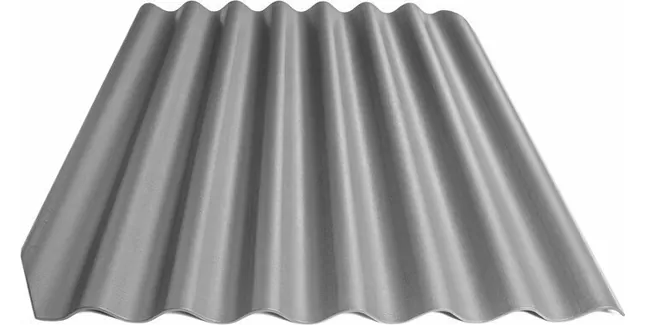
For many barns, stables and livestock buildings, fibre cement roofing sheets are a strong all-round option.
Fibre cement sheets combine cement with reinforcing fibres to create a durable roofing material. Their corrugated profile provides additional rigidity while helping rainwater drain from the roof when the sheets are installed at the correct pitch.
Fibre cement is commonly used in agricultural buildings where moisture, rainfall noise and long-term durability are important considerations. Compared with some uninsulated metal roofing systems, it can also provide a quieter internal environment during heavy rain.
However, the roofing material alone should not be relied on to control condensation or internal air quality. Appropriate ventilation and overall building design remain important.
Fibre cement sheets can be particularly suitable for:
Products such as the Eternit FarmTec Fibre Cement Sheet and Eternit UrbanPro Fibre Cement Sheet are designed for agricultural and other demanding applications.
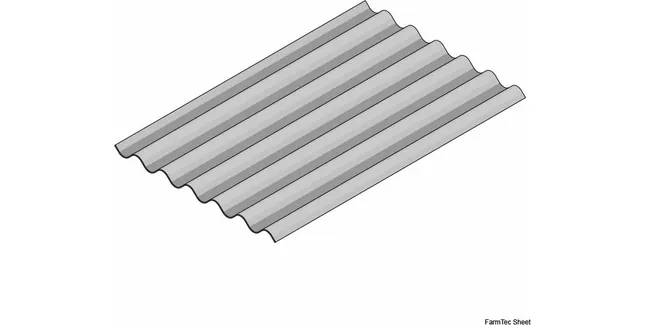
The main benefits of fibre cement roof sheets include:
Fibre cement is heavier than lightweight plastic or bitumen alternatives, so the roof structure must be capable of supporting the chosen system.
Correct fixings, laps, ridges and other compatible accessories should also be used in accordance with the manufacturer’s instructions.
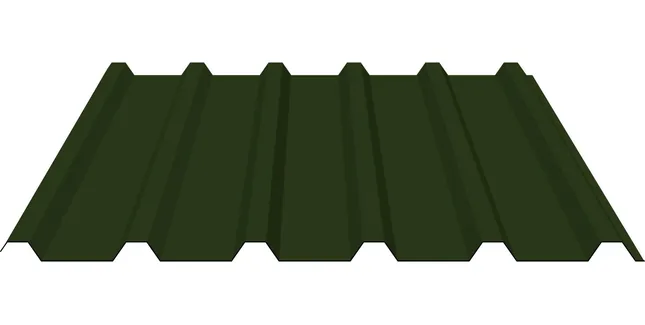
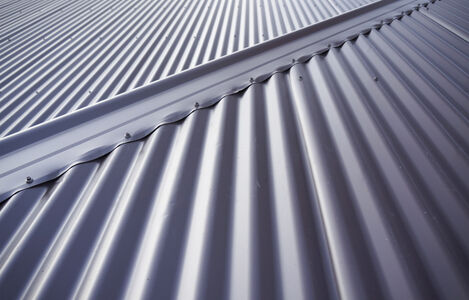
Metal roofing sheets are a popular option for agricultural buildings, particularly large barns, machinery stores, workshops and general-purpose farm buildings.
Profiled steel offers a high strength-to-weight ratio, which can make it practical for covering substantial roof areas without placing the same load on the supporting structure as some heavier roofing materials.
Metal sheets are also relatively quick to install and are available in corrugated and box profile designs.
Metal roofing is particularly worth considering when:
The protective coating or finish is especially important in agricultural environments. Moisture, animal waste, fertilisers and other substances can create potentially corrosive conditions, so the sheet specification should be appropriate for the intended use.
Condensation also needs to be considered when installing an uninsulated metal roof. Depending on the building, suitable ventilation, insulation, underlay or an anti-condensation treatment may be required.
Metal roofs can also generate more noise during rain or hail than some alternative roofing materials. This may be relatively unimportant in a machinery store but more relevant when specifying a roof for livestock or horses.
Before choosing a metal roofing system, consider:
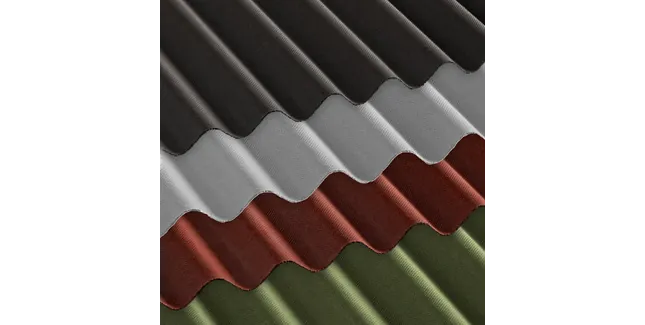
Corrugated roofing sheets are widely used on agricultural buildings.
Their wave-shaped profile provides additional rigidity while creating channels that direct rainwater towards the eaves, provided the roof has a suitable pitch and the sheets are correctly overlapped and fixed.
Corrugated sheets are available in several materials, including:
The best material depends on the scale and use of the building. Fibre cement or steel will generally be more suitable for large, permanent agricultural structures, while bitumen or PVC sheets may be appropriate for smaller outbuildings, shelters and ancillary areas.
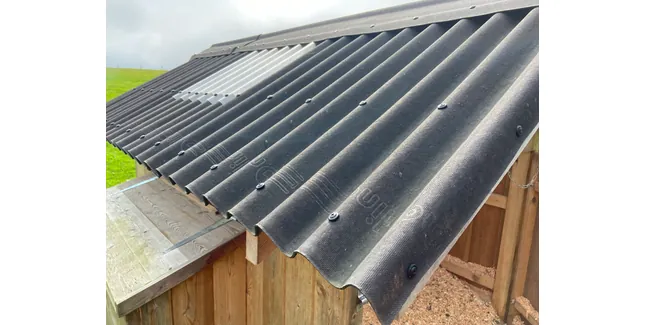
Bitumen roofing sheets provide a lightweight and cost-effective solution for many smaller agricultural buildings.
Made from bitumen-saturated fibres, these corrugated sheets are relatively easy to transport, cut and handle. Their low weight can make them particularly useful on structures that are not designed to carry heavier roofing sheets.
Bitumen sheets can be suitable for:
They offer good weather resistance and can produce less rainfall noise than an uninsulated metal sheet.
Products such as Coroline Corrugated Bitumen Roofing Sheets can be used on timber or suitable metal structures for sheds, stables and other outbuildings.
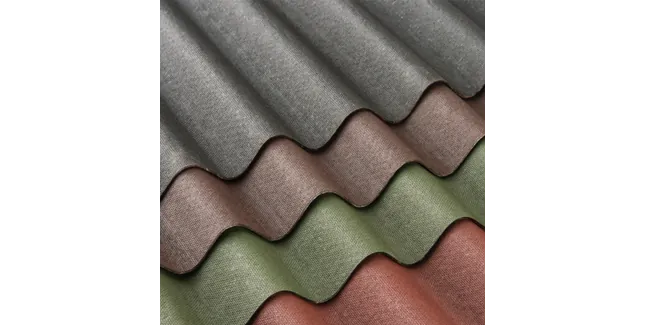
The main benefits include:
Bitumen sheets may not provide the same strength or service life as a heavy-duty metal or fibre cement system, so they are generally better suited to smaller structures and lighter-duty applications.
PVC and polycarbonate sheets are not usually selected as the primary roof covering for a large agricultural building, but they can be useful in specific areas.
Clear or translucent sheets can introduce natural daylight into a building and may reduce the need for artificial lighting during daylight hours.
Potential applications include:
When translucent sheets are installed alongside another roofing material, the profiles must be compatible.
The manufacturer’s guidance should also be followed for sheet thickness, support spacing, fixings, thermal expansion and ventilation.
PVC and polycarbonate sheets require particularly careful specification on larger or more exposed buildings. Wind loading, the chosen profile and the distance between supports will all affect whether a particular sheet is appropriate.
For a permanent stable roof, fibre cement sheets are often an excellent option because they combine durability and weather resistance with lower rainfall noise than many uninsulated metal systems.
Bitumen sheets can be a practical alternative for smaller timber stables, field shelters and tack rooms where low weight and straightforward installation are priorities.
Metal sheets can also be used on larger equestrian buildings, although condensation, ventilation and rainfall noise should be considered as part of the overall roof design.
You can explore sheets, fixings and accessories within our dedicated Agricultural and Stable Roofing Materials range.
The best roofing sheet for a barn depends largely on what will be housed or stored inside.
For livestock barns, fibre cement can provide a useful combination of durability, weather resistance and acoustic performance.
For machinery barns and general storage buildings, coated metal sheets may be preferred because they are strong, relatively lightweight and practical for covering large roof areas.
A combination of opaque roofing sheets and translucent rooflights can also be used to introduce natural daylight. Any rooflights should be compatible with the profile of the surrounding roofing sheets and installed in accordance with the manufacturer’s recommendations.
Metal roofing sheets are often a practical choice for machinery stores, workshops and equipment buildings.
These structures can require large roof areas and wide internal spaces, making the low weight and high strength of profiled steel particularly useful.
Fibre cement may instead be preferred where reduced rainfall noise, durability or a more traditional agricultural finish is important.
For a small workshop, tool store or maintenance shed, bitumen sheets may provide a more economical and easier-to-handle alternative.
Ventilation is an important consideration for almost every agricultural building.
Animals, wet equipment, stored crops and temperature changes can all increase moisture levels inside a structure. Without adequate airflow, condensation can form on the underside of a roof and potentially drip onto animals, machinery, feed or timberwork.
Depending on the roof design, measures may include:
The correct approach will depend on both the roofing material and how the building is used.
Livestock buildings in particular require careful ventilation planning so that moisture and stale air can escape without creating excessive draughts around animals.
Extra care is required when working on an existing farm or agricultural roof.
Older buildings may contain asbestos-cement roofing, while fibre cement sheets, rooflights and deteriorated metal roofing can all be fragile. A roof should never be assumed to be safe to walk on simply because it appears sound from below.
If an existing agricultural roof is being repaired or replaced:
The reinforcement incorporated into some modern roofing sheets may help reduce damage during handling, but this does not mean the sheets should be treated as a safe walking surface.
Every roofing sheet has a minimum recommended roof pitch.
Installing sheets below that pitch can prevent water from draining effectively and increase the risk of water entering through overlaps or around fixings.
Lower-pitched roofs may require longer end laps, additional sealing measures or a different roofing product.
You should also consider:
Always follow the installation guidance for the specific roofing sheet rather than applying one general pitch or overlap measurement to every product.
Even a high-quality roofing sheet will only perform properly when installed as part of a complete roofing system.
Depending on the roof design, you may need:
Using compatible components helps keep the roof watertight and provides a cleaner finish. It can also reduce the risk of weak points developing around ridges, verges and sheet overlaps.
Fixings should be positioned and tightened according to the manufacturer’s guidance. Overtightening can damage a sheet or washer, while insufficient tightening can allow water to penetrate around the fixing.
There is no single roofing material that will be ideal for every agricultural building.
As a general guide:
Before choosing, consider the building’s purpose, supporting structure, roof pitch, ventilation, exposure and expected service life.
It is also worth calculating the complete system cost, including ridges, fixings, flashings, rooflights and ventilation components, rather than comparing the price of the sheets alone.
At Roof Giant, you can find roofing sheets and compatible accessories for barns, stables, livestock housing, machinery stores and other rural buildings.
Our Agricultural and Stable Roofing Materials range brings together roofing sheets, fixings, ridges, flashings and ventilation products to help you plan a complete agricultural roofing system.
Before ordering, check your roof dimensions, pitch, support spacing and required overlaps so you can calculate the correct sheet sizes and quantities. Remember to include compatible ridges, fixings, flashings and other accessories in your order.
For further help comparing fibre cement, metal, bitumen, PVC and other materials, visit our Roofing Sheets Buyer’s Guide.